


Since the dawn of modern digital life, smartphones have played a powerful role in our daily routines. From the moment we wake up until we fall asleep, these devices help us manage schedules, capture memories, communicate with others, and enjoy entertainment during quiet moments. Over time, smartphones have transformed into cameras, wallets, calendars, offices, and social hubs—all packed into a small glass screen.
However, despite their usefulness, a major question is now shaping the future of technology. tech giants envision future beyond smartphones where innovation no longer depends on a single handheld device. According to leading technology companies, the next era of digital advancement may move away from smartphone-centered experiences and toward more natural, intelligent, and seamless systems.
Why Tech Giants Envision a Future Beyond Smartphones
The Limits of the Smartphone Design
One of the main reasons tech giants envision future beyond smartphones is the limitation of their design. Modern smartphones have reached a stage where improvements are mostly incremental rather than revolutionary. Each year brings better cameras, faster processors, and brighter screens, but the overall experience remains largely the same.
This is not due to a lack of creativity from technology companies. Instead, it is because smartphones are built on a fixed concept—a flat, handheld rectangle with a touch screen. There is only so much innovation possible within this structure, which is why companies are now exploring alternatives.
A Shift Toward More Natural Digital Experiences
Because of these limitations, tech giants envision future beyond smartphones that feels more natural and less demanding. Instead of tapping and swiping screens, future technologies will respond to voice, gestures, eye movement, and even presence.
The goal is to make technology feel invisible something that supports users quietly in the background rather than demanding constant attention. This shift reflects a deeper understanding of how humans naturally interact with the world.
Changing User Behavior and Digital Fatigue
The constant use of smartphones has caused digital fatigue. There are endless messages and screens that leave users exhausted mentally. The public is becoming more aware of their online habits and looking for ways to minimize the distractions. A lot of people are now using technology that can help them live their lives without taking up their the focus of their attention. This shift in attitudes is the main reason technology giants are planning the future that goes beyond smartphones.
The Problem of Constant Screen Time

Another reason tech giants envision future beyond smartphones is the growing issue of digital fatigue. Constant notifications, endless scrolling, and frequent interruptions are leaving users mentally exhausted. Smartphones often demand attention at all hours, pulling people away from real-life moments.This overdependence on screens can lead to stress, anxiety, reduced focus, and a strong desire to disconnect.
Demand for Healthier Technology Habits
As awareness of digital well-being increases, users are demanding healthier technology habits. They want tools that reduce distractions, improve focus, and encourage balance. Recognizing this shift, tech giants envision future beyond smartphones where technology supports life instead of controlling it.
The Rise of Wearable Technology
Wearable devices are one of the strongest signs that tech giants envision a future beyond smartphones.
Smartwatches Becoming Everyday Digital Centers
Smartwatches are no longer limited to counting steps. They now support calls, messages, notifications, payments, and fitness tracking. For many everyday tasks, smartwatches provide faster and more convenient access than smartphones, especially while moving.
Health, Fitness, and Real-Time Monitoring
Health tracking is where wearables truly shine. Smartwatches continuously monitor heart rate, oxygen levels, stress, and physical activity. Unlike smartphones, which are often set aside, wearables stay with users all day. This constant presence supports the vision where tech giants envision future beyond smartphones focused on proactive health care.
Smart Glasses and Augmented Reality
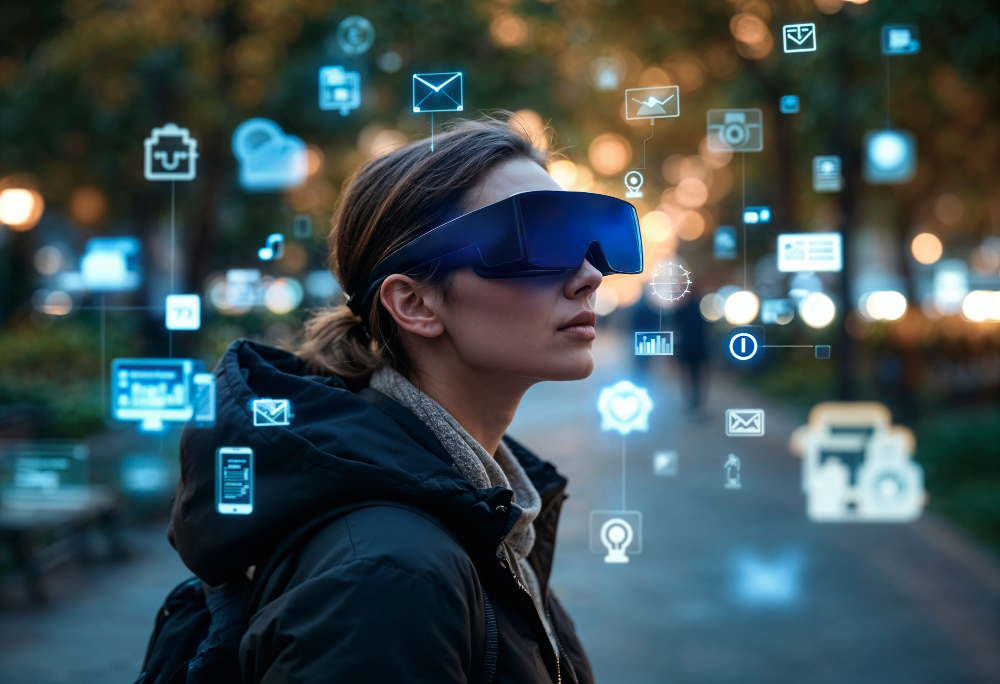
Smart glasses are becoming a significant approach to reducing dependence on smartphones. These glasses show information within the view of the wearer which allows navigation or notifications as well as translations without having to glance at the display. Augmented Reality (AR) enhances the user experience by overlaying digital information on the real world, creating more natural interactions
Information Without Looking Down
Smart glasses reduce screen dependency by displaying information directly in the user’s field of view. Notifications, directions, and translations appear naturally, allowing users to stay engaged with the real world.
Augmented Reality as a Smartphone Alternative
Augmented reality glasses may replace many smartphone functions. Voice commands and gestures can handle calls, messages, photos, and schedules. This hands-free approach is a major reason tech giants envision future beyond smartphones
AR and VR Leading the Next Digital Era
Augmented Reality (AR) as well as VR (VR) aren’t only for games, they are changing the way we work, learn and interact. AR lets digital data be layered over the real world and VR creates immersive virtual worlds. These technologies facilitate the remote sharing of information, virtual classes and experiences that smartphones can’t offer. That’s why tech giants believe in a future that is beyond smartphones, with a focus specifically on AR as well as VR to be the future frontier for digital technology.
Beyond Gaming and Entertainment
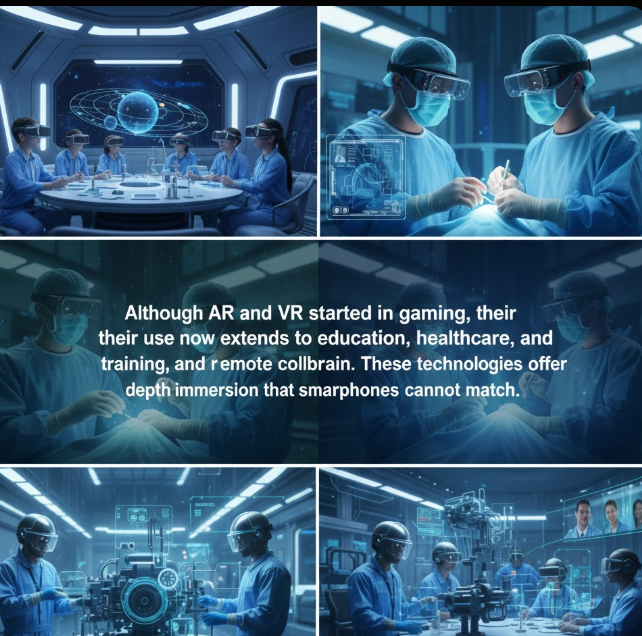
Although AR and VR started in gaming, their use now extends to education, healthcare, training, and remote collaboration. These technologies offer depth and immersion that smartphones cannot match.
VR in Work, Learning, and Social Interaction
Virtual reality enables shared digital spaces where people can work, learn, and socialize together. This immersive experience aligns perfectly with how tech giants envision future beyond smartphones
Artificial Intelligence as the New Interface
Artificial Intelligence (AI) is transforming the way people interact with technologies, shifting beyond touchscreens, to voice gestures and even predictive systems. . AI is able to learn habits routines, preferences, and habits which makes digital experiences more personal and effective. The increasing role of AI is one of the main reasons that tech giants are planning the future of smartphones.
Voice Assistants Replacing Touch Screens
AI-powered voice assistants are becoming the main way users interact with technology. Speaking is faster and more natural than typing, reducing the need for screens.
Context-Aware and Predictive AI
Advanced AI systems will understand habits, routines, and environments. They can predict needs, suggest breaks, and automate tasks. This intelligence-driven approach supports why tech giants envision future beyond smartphones
Spatial Computing and Mixed Reality
Spatial computing combines digital media and the real world and lets users use virtual items like they were real objects. The Mixed Reality devices such as Apple Vision Pro, let users put virtual screens in their place and control them using gestures and navigate through digital environments with ease. This provides immersive hand-free experiences that are beyond what smartphones are able to provide. In the end, tech giants have a vision of the future of smartphones in which technology is more intuitive as well as seamlessly integrated with daily life.
Understanding Spatial Computing
Spatial computing blends digital content with physical space. Instead of flat screens, users interact with floating digital objects around them.
Apple Vision Pro and the Smartphone-Free Vision
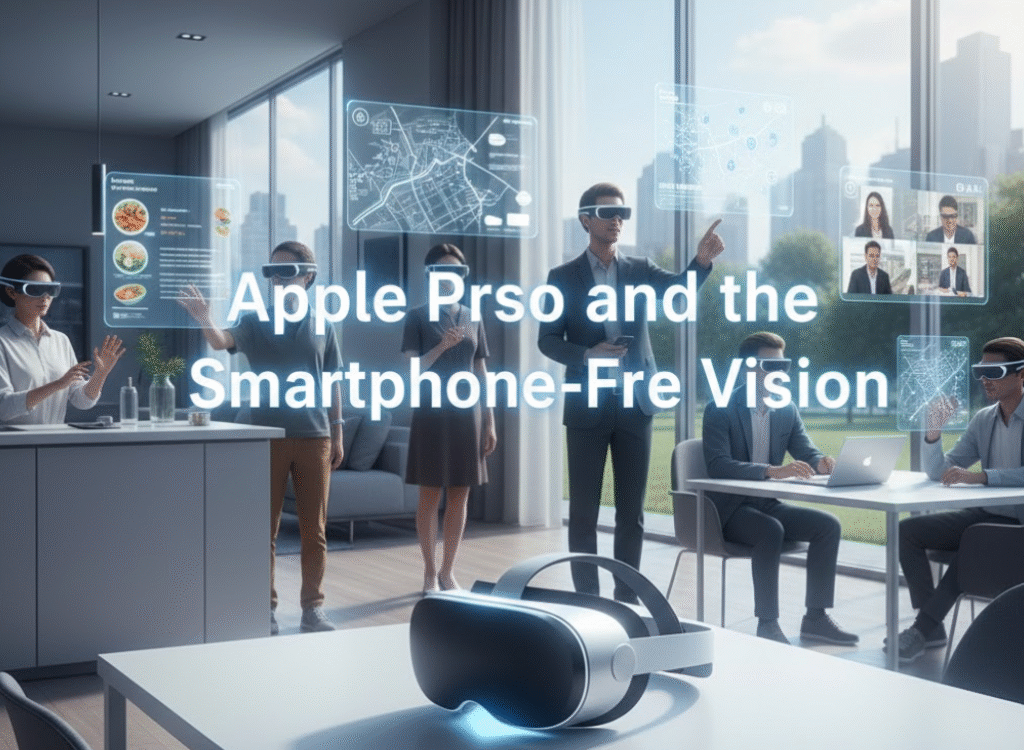
Devices like Apple Vision Pro show howtech giants envision future beyond smartphones, offering interaction through hand gestures, eye movement, and natural positioning of digital screens.
Smart Homes and Ambient Computing
Ambient computing and smart homes enable technology to operate quietly behind the scenes, and adapts to our needs without any constant input. devices like smart lighting thermostats, smart lights, and voice assistants will automatically adjust settings according to the mood, routines or preferences. This eliminates the necessity of smartphones as a central control making for an easier and more convenient living space. This is one of the main reasons that tech giants are planning the future of smartphones beyond and focusing on technology that seamlessly blends with everyday life.
Technology That Works Quietly
Ambient computing allows devices to operate silently in the background. Smart lighting, temperature control, and music adjust automatically without user input.
Homes Without Screens
In the near future, homes may respond to human behavior without smartphones. This screen-free environment reflects howtech giants envision future beyond smartphones
Challenges in Moving Beyond Smartphones
User Adoption and Cost Barriers New technologies take time to adopt. Learning curves, high costs, and infrastructure needs may slow the transition.
Privacy and Data Protection Concerns
As technology becomes more personal, privacy and data security become critical. Ethical design and strong regulations will shape how tech giants envision a future beyond smartphones responsibly.
Is the Smartphone Really Going Away?
Evolution, Not Elimination Smartphones are unlikely to disappear soon. Instead, they will evolve into secondary devices while newer technologies take the lead.
Conclusion
In conclusion, tech giants envision a future beyond smartphones not because phones have failed, but because technology is evolving. Wearables, artificial intelligence, spatial computing, and ambient systems are shaping a world where digital tools work quietly and intelligently in the background.Smartphones will still exist, but their dominance is slowly fading. Tech giants envision future beyond smartphones is less about staring at screens and more about experiencing seamless, human-centered innovation.
FAQs
1. Will smartphones disappear completely in the near future?
No, smartphones will not disappear completely. However, astech giants envision future beyond smartphones phones may become secondary devices used only for specific tasks.
2. What technology will replace smartphones first?
Wearables such as smartwatches and AR glasses are the most likely replacements. These tools align closely with howtech giants envision future beyond smartphones.
3. How will AI change the way we use technology?
AI will become the main interface, allowing voice and context-based interaction. This shift is central to why tech giants envision future beyond smartphones.
4. Are these new technologies safe to use?
Security and privacy are major concerns. Tech companies are developing encryption and ethical frameworks to ensure safe adoption as tech giants envision future beyond smartphones.
5. How long will it take to move beyond smartphones?
The transition may take 10 years or more. The shift will be gradual as tech giants envision future beyond smartphones through steady innovation and adoption.

A Senior SEO manager and content writer. I create content on technology, business, AI, and cryptocurrency, helping readers stay updated with the latest digital trends and strategies.