


What Is a Platform Event Trap?
Platform Event Trap Platform Event Trap refers to a series of architectural errors and misinterpretations that happen when developers use Salesforce Platform Events without fully comprehending their asynchronous nature. Instead of designing robust and scalable systems developers create unstable workflows that fail under actual production traffic. This problem isn’t due to a single issue. It is usually a gradual process that results from bad design choices, untrue beliefs, and insufficient testing environments. Think of it as the construction of a highway that is not accompanied by traffic signals. All is well when just a handful of cars are on the road. If a huge number of vehicles show up in the same area, collisions are inevitable.
Understanding Salesforce Platform Events
Before you can understand the dangers, it is important to know the nature of Salesforce Platform Events actually mean. Platform Events are Salesforce’s primary system of event-driven communications designed to facilitate real-time integration between systems, applications and services. Instead of communicating directly the platforms exchange messages via a central event bus.

Imagine a large airport. Traditional integrations behave as passengers calling every airline desk to get information. Platform events function differently. They function as an announcement system for airports. A message is broadcast to the public and everyone who is interested reacts on their own. This method reduces the tight coupling between systems and boosts capacity dramatically.
Here’s a brief outline of the process:
| Component | Role |
|---|---|
| Publisher | The event is sent to the person who initiated it. |
| Event Bus | Distributes and stores the event |
| Subscriber | Reacts and listens to the situation |
This structure is extremely effective when you have complex environments in your enterprise. For instance, when you have an Opportunity shuts down in Salesforce several systems might require updates simultaneously. A single event could alert systems for accounting warehouses, analytics platforms and other communication tools simultaneously. Reddit developers often describe the “baton passing” process as means to speed up the process and enhance user experience.
Why Businesses Use Platform Events
Platform events are a favorite of businesses because they address a major issue in the modern software ecosystem that is: the complexity. Traditional integrations can create complicated dependencies, where a broken API can cause disruption to an entire workflow. Platform events facilitate communication by separating systems from one another. A single event can trigger a variety of actions, without each system having explicit knowledge of the other.
Platform events assist businesses in achieving:
- Faster system communication
- Better scalability
- Reduced dependency on API
- Automation flexibility has been improved.
- Business workflows that are real-time
Another benefit is optimizing performance. Platform events are used by developers to remove heavy automation from transactions that are not directly involving users. Instead of making users wait for complicated processes to be completed, Salesforce can publish an event immediately and then continue the process while background users complete other tasks later. As per Salesforce discussion forums, certain businesses have cut down on processing time for transactions significantly by transferring automated tasks that are not critical to the business into events on the platform.
Common Causes of the Platform Event Trap
Most failures on platform events occur due to the fact that developers do not understand synchronous behavior. They view platform events as traditional synchronous logic, even though the architecture behind them behaves differently. This mistake results in a chain reaction of undiscovered issues that gradually increase as time passes. One of the biggest errors is to assume that the order for delivery of events remains the same. Salesforce is not always able to guarantee absolute event ordering across different systems..
These are the top frequently-cited reasons for this issue: Platform Event Trap:
| Problem | Result |
|---|---|
| Assuming synchronous behavior | Workflows that are delayed or not working |
| The event is not being ordered | Inconsistency of data |
| Retrying is not a good idea. | Transactions lost |
| High event volume | Failures of the Governor Limitation System |
| Test environments for limited testing | Production unstable |
| Poor subscriber design | Processing duplication |
One of the biggest risks is excessive confidence. The developers see the success of sandbox testing and believe that production will be the same. In reality, systems are not always predictable when there is a lot of traffic. Production environments can cause concurrency issues time conflicts, as well as new edge cases that tests of smaller size are unable to detect.
Real-World Examples of Platform Event Failures
The Platform Event Trap becomes easier to comprehend when it is viewed through the lens of real-world scenarios. Many organizations do not know how to build unstable systems because everything seems functional in the early stages of the process of development. The problems only become apparent when different systems begin to communicate at the same time under pressure from production.
One common failure occurs during large-scale integrations. Imagine a business using Salesforce to control sales operations, while also connecting to ERP software warehouse systems, warehouse software and the customer support platforms. Developers create platform events that occur every when an order is closed. At first, the workflow appears flawless. Orders update quickly and invoices are created correctly and warehouse notifications get sent immediately.
Warning Signs Your System Is Falling Into the Trap
Platform Event Trap Platform Event Trap rarely appears in the night. The majority of systems display small warning signs before major problems occur. Knowing these early warning signs will save businesses a significant amount of time, money, and stress in the future.
One of the most important warning signs is inconsistency in timing of automation. If workflows are completed infrequently but sometimes experience unanswered delays, it could be that asynchronous congestion already be affecting the processing of events. The majority of developers misinterpret these issues for random fluctuations in performance when the actual issue lies within the overloaded event participants.
Other warning signs that are common are:
- Random integration failures
- Notifications that are delayed
- Missing event logs
- Unpredictable event ordering
- Sudden governor limit errors
- Poor subscriber performance
Issues that are specific to production are particularly suspect. If systems perform flawlessly in testing environments, but fail to predictably following deployment, the system might already be being afflicted by scalability issues. As per Salesforce forum discussions a lot of problems with platform events are not apparent until real-world production volumes cause conflicting concurrency.
In the absence of these warning signs, businesses further into the trap.
Best Practices to Avoid the Platform Event Trap
Beware of falling into the Platform Event Trap requires discipline planning, strategic thinking, and architectural maturity. Platform events are effective. The aim is not to avoid these events completely, but to use them wisely. One of the main best practices is to design an idempotent subscriber. That means subscribers are able to deal with duplicate event delivery without causing repeated actions. In the event that the same event occurs twice, the results will remain consistent instead of producing duplicate records or unbalanced updates. Experts always recommend unique event IDs and deduplication logics for this reason.

Developers must separate important and non-critical automation in a careful manner. The immediate transactional logic must remain as synchronous when it is needed, while background tasks can be able to move into an asynchronous platform event. Imagine it as an eatery kitchen. Cooking is essential and happens instantly however inventory reporting could be done later, without impacting the customer service.
A strong monitoring system is equally crucial. Companies should keep track of:
| Monitoring Area | Why It Matters |
|---|---|
| Event volume | Limit issues with governors |
| Failure of the subscriber | Detect hidden processing errors |
| Retrying the attempts | Find insecure integrations |
| Processing latency | Find out the bottlenecks to performance. |
| Duplicate events | Prevent data corruption |
Testing environments should also be more real. Simple sandbox testing isn’t enough for an event-driven system. Teams must simulate large events, simultaneous processing, and failures in integration to find weaknesses in scalability before the deployment.
Retry mechanisms require special attention too. Sometimes, events fail for a short time due to network interruptions as well as subscriber malfunctions or other API issues. Without retry handling, organizations are at risk of losing crucial operations in silence. Numerous experts suggest combining retries with dead-letter queues, or failure log systems to ensure the ability to see unsuccessful events. Security must never be neglected also. Publishers and subscribers must adhere to the least privilege access guidelines because inadequately secured event systems may expose sensitive business information inadvertently.
Platform Events vs Traditional Integrations
Comparing events on platforms to traditional integrations can help clarify why an event-driven architecture is expanding despite its complicated nature. Traditional integrations generally rely on the direct communication between systems. A program sends an inquiry, awaits a response and then continues to process the request afterward.
Platform events operate differently.
In lieu of direct communications, the systems broadcast events to a central event bus, where the participants respond independently. This allows for a much greater scalability since systems are no longer dependent closely on each other.
Here’s a basic comparison:
| Feature | Traditional Integration | Platform Events |
|---|---|---|
| Communication Style | Direct Request-Response | Publish-subscribe |
| Scalability | Moderate | High |
| Coupling | Tight | Loose |
| Real-Time Flexibility | Limited | Excellent |
| Complexity | Lower in the beginning | Long-term, higher |
| Failure Isolation | Weak | Stronger |
Traditional integrations are great in simpler systems that require regular transactions. Platform events shine in huge systems that have many interconnected services. The cost is operational complexity. Event-driven systems require greater comprehension of concurrency monitoring in addition to distributed processing. The choice between these two options is heavily on the business needs. Businesses looking for high scalability and real-time communication typically benefit by platform events. However, this is only if executed with careful planning of the architecture.
The Future of Event-Driven Salesforce Architecture
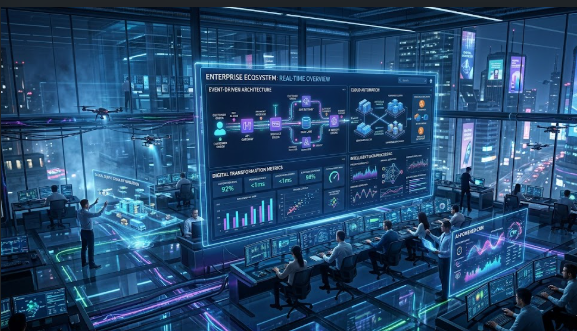
Event-driven architecture is becoming more essential as companies expand their online ecosystem. Platforms for cloud computing, AI services, mobile applications, and APIs from outside all require speedier and more flexible models of communication. Platform events fit perfectly into the future as they allow systems to be responsive in real-time. Salesforce continues to invest heavily into technology that is based on events, such as Platform Events, Change Data Capture as well as Pub/Sub APIs. As architectures for enterprise become more distributed, events-driven communication is likely to become a standard procedure instead of an optional infrastructure.
Conclusion
Platform Event Trap Platform Event Trap is one of the most misunderstood issues in the current Salesforce architecture. Platform events provide incredible flexibility with real-time integration capabilities and scalability advantages that conventional integrations struggle to meet. Businesses make use of them to break up systems, increase automation speed and build highly responsive workflows across complicated digital ecosystems. The positive side is that these issues can be avoided. A solid architecture, real-time testing and a deterministic subscriber design Retry mechanisms, as well as constant monitoring significantly reduce the risks. Platform events aren’t risky instruments. They just require well-established engineering practices and careful planning.
Related content
FAQs
1. What is the Platform Event Trap in Salesforce?
Platform Event Trap Platform Event Trap refers to the architectural errors made while using Salesforce Platform Events without fully understanding the asynchronous processing behavior. These errors could lead to failures in integration duplicate records, slow workflows, as well as scalability issues.
2. What is the reason Salesforce Platform Events asynchronous?
Platform events are created to facilitate an scalable, event-driven communication. Instead of immediate processing of request-response events function independently via an event bus, which allows systems to respond without affecting user transactions.
3. Platform Events guarantee delivery? Platform Events guarantee delivery order?
It’s not always the case. Developers shouldn’t be relying on strict orders across multiple systems. An appropriate architecture should account for possible timing variations and situations where processing is duplicated.
4. How can developers avoid duplicate event processing?
Developers should create idempotent subscribers with unique event IDs, deduplication, and safe Retry handling to ensure that repeated events do not damage the business data.
5. Do Platform Events better than traditional APIs?
Platform events are best suited for real-time, scalable, loosely coupled systems. Traditional APIs can be beneficial for workflows that are simpler and synchronous that require immediate response.

A Senior SEO manager and content writer. I create content on technology, business, AI, and cryptocurrency, helping readers stay updated with the latest digital trends and strategies.