


Visual effects techniques are one of the major components of the modern digital storytelling. When you watch the latest blockbuster film or a TV series or a video game as well as a social media advert There is a good possibility that visual effects will be employed to create immersive experiences. Through the years, VFX has evolved from simple camera tricks to advanced digital technology that can create complete worlds, realistic characters and spectacular action sequences. Nowadays visual effects aren’t exclusively employed in Hollywood productions, but also in education, marketing as well as gaming, architecture, and virtual real-time applications.
The rising demand for top-quality digital content has driven the VFX industry to new levels. Recent research indicates that the global market for VFX continues to grow rapidly, fueled by technological advances in real-time rendering artificial intelligence, virtual production and streaming content. Analysts from the industry predict a strong growth in the coming decade as content creators and studios make investments in visual technology.
What Are Visual Effects Techniques?
Visual effects are techniques that are used to create, manipulate or enhance images that is not possible to capture during live-action filming. These techniques blend technology, creativity and artistic skills to create scenes that are otherwise difficult, risky or costly to make physically.
Filmmakers can make use of the effects of visuals to make futuristic cityscapes and mythical creatures, huge-scale explosions and realistic weather conditions without having to construct costly sets or exposing people to risky circumstances. The goal of VFX isn’t just to create a spectacle, but rather to aid storytelling by creating authentic environments, and increasing the level of engagement. When visual effects are created correctly, viewers will not even realize that they are watching digitally generated content since everything looks smooth and organic.
Why Visual Effects Matter in Modern Media
The entertainment industry is ever more dependent on effects. People expect cinematic experiences which are stunning visually and extremely real. Gaming companies, streaming platforms and production studios all compete to produce content that grabs interest and keeps viewers interested.
Visual effects can also reduce production costs in many instances. Instead of building huge physically constructed sets, or having to travel various places, teams of production are able to create digital sets that look as convincing. This lets creators concentrate more on story telling and still maintain budget-friendly efficiency. Beyond entertainment visual effects are frequently employed in educational visualization, scientific research as well as medical training and even in advertising, showing that their use extends beyond television and movies.
The Evolution of Visual Effects
Traditional Effects Era
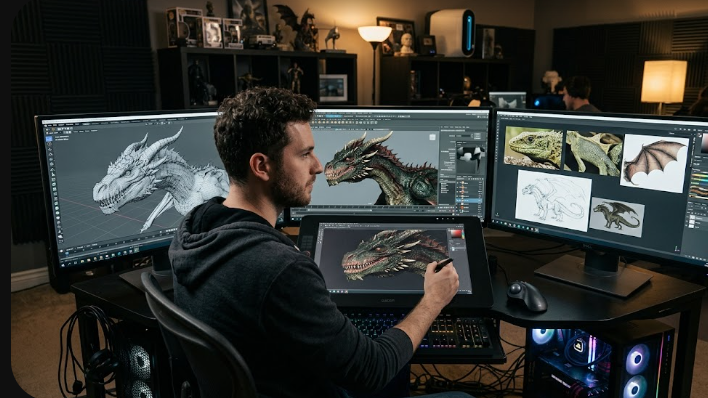
Before computers were incorporated into filmmaking visual effects were based heavily on the practical techniques. The early filmmakers employed tiny models, painted backgrounds double exposures and forced perspectives, and optical illusions in order to create stunning visuals. These techniques demanded creativity and technical proficiency, but did not have the same capabilities as the capabilities of digital technology today.
The classic films showed how practical effects could make believable environments without the use of advanced computers. Although many of these traditional methods are still in use and are sometimes utilized today however, the industry started shifting towards digital workflows in mid-century when computer technology advanced.
Digital Transformation
The advent of computer-generated images revolutionized the world of visual effects. CGI enabled artists to create realistic characters, environments and simulations that had unimaginable quality and versatility. Modern productions combine live-action footage and digital elements in a way that viewers are unable to tell between actual and computer-generated content.
Recent reports from the industry indicate that the 3D and VFX market is experiencing a significant growth with forecasts predicting significant growth to 2033. The reason for this is the increasing demands for immersive content, virtual production and real-time rendering technologies.
Most Popular Visual Effects Techniques
Computer-Generated Imagery
CGI is the base of the modern visual effects. The process involves the creation of digital models, environments and characters by using specially-designed software. CGI is the source of many of the amazing visuals in the latest TV shows, films as well as video games.
The power of CGI is its versatility. Artists can create everything from realistic animals and human beings to whole galaxies and fantasy worlds. The latest rendering technologies allow digital images to look incredibly real and realistic, making CGI an extremely effective tools for creators. As software and hardware continue to advance, CGI becomes more realistic and efficient. It is also more accessible each year.
Green Screen and Chroma Keying
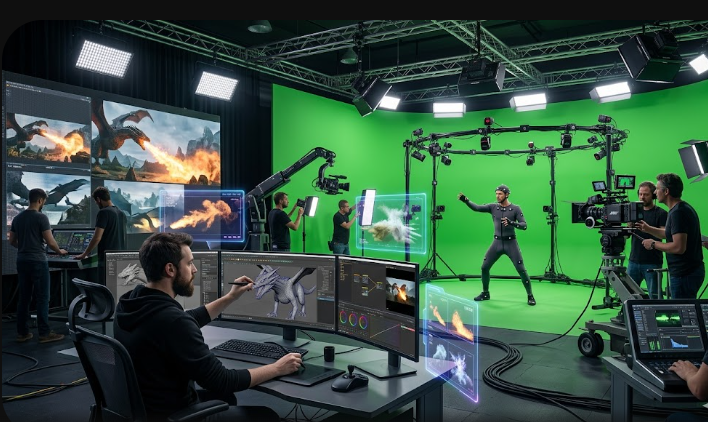
The green screen technique is among the most popular techniques for visual effects. Actors perform their actions on the backdrop of green. This is later digitally removed and replaced by a different image or a scene.
This visual effects techniques lets filmmakers set characters in locations that aren’t there or are hard to reach. Green screens are frequently used in TV broadcasts, films as well as online content creation as well as advertising campaigns. A proper lighting setup and subsequent post-production processes is essential for achieving real outcomes. If done properly the viewer will not be able to discern how the backdrop was made digitally.
Motion Capture Technology
Motion capture tracks human movement and converts it into digital characters. Actors wear costumes equipped with sensors that record the movement of their bodies expressions, facial expressions, as well as gestures. This information is then transferred on computer generated characters.
Modern motion capture technologies have evolved into extremely sophisticated. Recent advances regarding facial expression capture have allowed digital characters to reproduce subtle expressions and emotions with astonishing precision. This technology has led to the creation of several of the most famous digital characters in the history of cinema while keeping real human performances.
Compositing
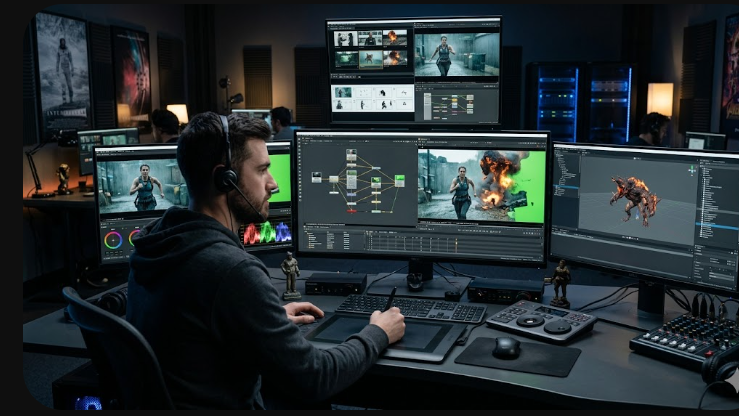
Compositing refers to the act of combining several visual elements to create a single image. It’s the final step in which CGI live-action footage, backgrounds effects, and other elements are merged.
A skilled compositor will ensure that shadows, lighting perspectives, and colors remain uniform throughout the scene. Without compositing, even most sophisticated CGI will appear to be disconnected to live action footage. This technique is vital to creating realistic visual experiences, and is an essential element for professionals’ VFX workflows.
Matte Painting
Matte painting is utilized to create large-scale scenes and backgrounds. In the past artists painted landscapes onto glass panels in order to extend physical sets. Nowadays digital matte painting is a combination of painting, photography, as well as 3D components to produce realistic landscapes.
This technique is often employed to create fantasy kingdoms, futuristic cities historic settings, and vast landscapes. Matte painting can help production teams create stunning visuals without the expense of creating physical structures.
Rotoscoping
Rotoscoping is the process of tracing characters or objects frame-by- frame, separating them from background. This lets artists apply effects, alter backgrounds, or even remove undesirable elements with accuracy. Even though modern software incorporates AI-assisted tools to simplify this process, it requires substantial human involvement. It remains a vital element of production of visual effects since it offers the precision required for compositing complex tasks.
Particle Effects
Particle systems emulate natural phenomena like fire, smoke rain, snow dust, explosions and other magical effects. Artists employ specific software to regulate the way millions or thousands of particles interact within an environment. Particle effects bring the appearance of real and add atmosphere to productions. If you want to create a small snowfall or an enormous explosion of volcanic ash, particles can help make environments come alive. Modern advances in simulation technology have allowed these effects to be more realistic and efficient computationally more than they ever were.
Advanced Visual Effects Techniques
Virtual Production
Virtual production is changing the way filmmaking gets done. This technique blends live rendering in real time, LED walls and digital settings for creating immersive shooting environments directly on the set. Actors are able to interact with virtual worlds in real-time instead of creating them on an green screen.
The major studios continue to invest in digital production technology as they increase efficiency, decrease costs and increase flexibility. Entertainment companies across the globe are expanding their capabilities in virtual production as the demand for virtual production continues to grow.
Real-Time Rendering
Traditional rendering may take days or even hours to create a single scene. Real-time rendering drastically reduces the time required to create images instantly. Technology such as game engines have created real-time rendering as an important trend within the VFX industry.
This technology lets artists, directors, and customers to view immediate results, which improves collaboration and speeding up production times. Industry experts recognize real-time rendering as among the most important developments that will shape what the next generation of effects visual.
AI-Powered Visual Effects
Artificial intelligence is quickly changing workflows for visual effects. Tools for AI can streamline repetitive chores, aid in animation, increase the accuracy of tracking, speed up rendering and even produce visual content.
Recent research shows that AI-driven systems are making creation of visual effects effective and easily accessible. Although AI isn’t likely to completely replace creative professionals however, it is becoming an increasingly effective instrument that aids creative professionals and increases productivity.
Visual Effects in Different Industries
visual effects techniques aren’t only used in filmmaking. The gaming industry heavily relies on VFX in order to create immersive worlds and realistic interaction between characters. Advertisers make use of visual effects to create captivating advertisements that attract attention. Educational institutions use VFX to show science-based concepts. Healthcare facilities employ simulations for training purposes.
Virtual real-time and augmented reality applications depend on visual effects in order to create immersive experiences. As the use of digital media increases and expand, the impact of VFX extends to new industries and applications. The wide spread of VFX adoption has contributed to the continuous development of the world’s industry of visual effects.
Benefits of Modern VFX
| Benefit | Description |
|---|---|
| Creative Freedom | Creates worlds for creators that transcend physical boundaries |
| Cost Efficiency | It eliminates the need for costly sets and places |
| Safety | Lets you enjoy dangerous scenes without putting human lives at risk |
| Flexibility | Supports changes during post-production |
| Realism | Creates authentic characters and environments |
| Audience Engagement | Provides an immersive experience in the visual |
This is the reason why visual effects have become an essential element of modern production of content across many industries.
Challenges in Visual Effects Production
Despite the advancements in technology the production of visual effects techniques is facing numerous difficulties. Intense deadlines, growing client expectations, and the rapid evolution of technology demand artists to continually refresh their knowledge. The introduction of AI tools opens up both potential and uncertainty regarding the future workflows. Studios need to balance creativity and efficiency while still maintaining the highest standards of quality. As the expectations of viewers increase Visual effects teams are under increasing pressure to produce more complex results on shorter timeframes for production. This makes constant learning and adaptation vital for professionals who work in the VFX field.
Future of Visual Effects Techniques
visual effects techniques’ future is extremely promising. Forecasts for the industry suggest a steady growth due to streaming games, content digital production and artificial Intelligence, and immersive technology. Market research forecasts significant growth in the VFX industry over the next years as businesses make investments in the development of digital content.
New technologies like artificial intelligence-controlled generation (AI), cloud rendering and real-time workflows for production will likely to change the way visual effects are made. With these technologies becoming more readily available smaller studios and independent creators will have access to features that were once exclusive to large production companies. Next-generation visual effects is likely to be more realistic as well as efficiency and interactivity.
Conclusion
visual effects techniques have revolutionized the way stories are presented in the digital age. Beginning with CGI and compositing, to video capture, virtual production and motion-capture techniques enable creators to transform their imagination into reality. Modern viewers expect immersive experiences and VFX gives the tools to satisfy those requirements. While technology is continuing to advance and improve, visual effects will become increasingly powerful and easy to access. The blend of artistic imagination and technological advancements assures that VFX will be central to making films, gaming, marketing as well as education and other industries for many years to in the future.
FAQs
1. What are visual effects?
Visual effects techniques are strategies that are used to create or enhance images using the use of digital equipment and subsequent post production techniques.
2. Is there a most popular VFX technique?
Computer-generated image (CGI) is currently the most commonly used techniques for visual effects.
3. How do green screen technologies work?
Green screen technology takes away the color of the background replacing it with electronic images in post-production.
4. Is AI replacing VFX artists?
AI can help automate tasks and increase efficiency, however the human imagination and creative judgement remain vital.
5. What industries make use of visual effects?
Gaming, film, television advertising, education, architecture, healthcare and the virtual reality industry all employ visual effects.

A Senior SEO manager and content writer. I create content on technology, business, AI, and cryptocurrency, helping readers stay updated with the latest digital trends and strategies.